
Insights from Global MIL Week 2025
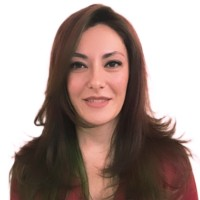
By Tania Azadi
2025/11/04
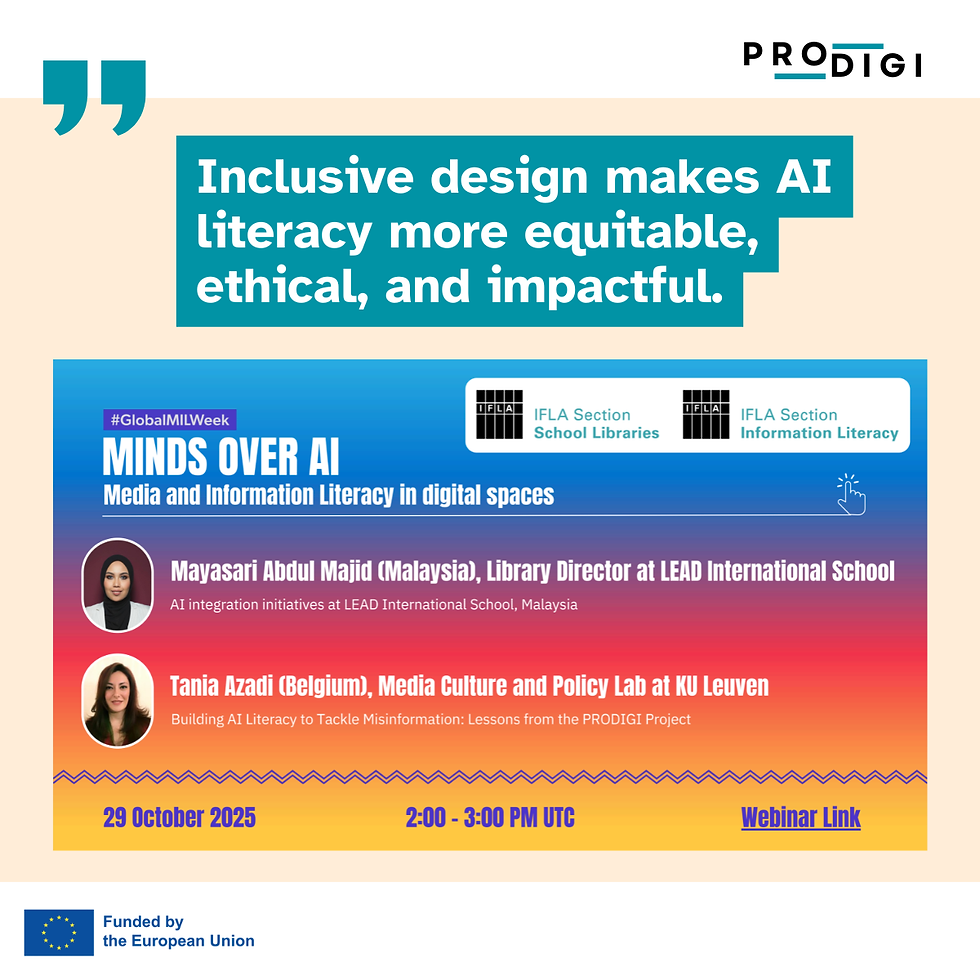
At this year’s International Federation of Library Associations and Institutions (IFLA) Information Literacy and School Libraries Joint Global MIL Week Webinar on October 29, 2025, Tania Azadi shared inspiring updates from the PRODIGI Project. Our work focuses on helping every young person understand and use artificial intelligence in ways that are responsible, ethical, and empowering.
Bridging the Gaps
Too often, conversations about AI literacy leave out the voices of those who face the biggest barriers. Refugee youth, unaccompanied minors, and other vulnerable learners are rarely part of research or educational design.PRODIGI is changing that.
By working hand in hand with educators, communities, and young people themselves, we are developing learning tools that reflect real experiences and local contexts. Our goal is to make AI education truly inclusive, ensuring that all learners have the knowledge and confidence to take part in a digital society.
Collaboration that Creates Impact
Meaningful inclusion depends on collaboration. We are proud to work closely with partners such as LINC, Fedasil, and MLA to ensure that our tools and resources are relevant and useful in everyday learning environments. Together, we are creating practical approaches that support both teachers and students.
From Awareness to Ethics
Understanding AI is about much more than knowing how it works. Ethical and responsible use is a central part of our framework. We help learners think critically about fairness, transparency, and accountability in digital technologies.
Building on Evidence
To make sure our tools meet the highest standards, we are using a rigorous validation process. Expert reviews, cognitive interviews, and large-scale testing with more than one thousand students across Flanders are helping us refine and strengthen the AI literacy scale. Each step brings us closer to evidence-based resources that serve diverse learners with accuracy and care.
AI literacy should not be a privilege. It should be a pathway for everyone to participate, question, and shape the digital future.

Opmerkingen